Agentic Code Delivery: Applying AI Where It Clears the ROI Bar

Key takeaways
The fix isn’t more autonomy, it’s disciplined orchestration: deterministic tooling as the backbone, AI agents applied where they demonstrably reduce lead time or defect rate, and human approval at every stage that carries material risk.
Where Enterprise Delivery Actually Bottlenecks
According to a McKinsey study, Generative AI can cut the time to write new code by 35–45%, but those gains fall below 10% on complex work that requires system, architecture, and business context (McKinsey, 2026).[1]
As DEPT® puts it, enterprise software isn’t judged by time-to-working-demo; it’s judged by whether it can be integrated, secured, supported, and run safely over time.[2]
That’s the real gap: ClearRoute reports median enterprise lead time to production still runs 30–45 days, driven by testing, security, compliance, approvals, and release management (the deterministic parts of delivery, not the parts AI writes).[3]
Faster code generation doesn’t close that gap by itself. Applied without discipline, it can widen it: longer review queues, more integration risk, more technical debt. The question isn’t whether to adopt agents, it’s where they clear the bar, and where proven tooling should keep doing the job it already does well.
Every Stage Should Earn Its Place
Agentic Code Delivery applies AI agents only to the stages of the SDLC where they earn their place, planning and code generation, where nuance and synthesis matter, while deterministic, traditional tooling remains the backbone for compiling, testing, security scanning, and release mechanics.
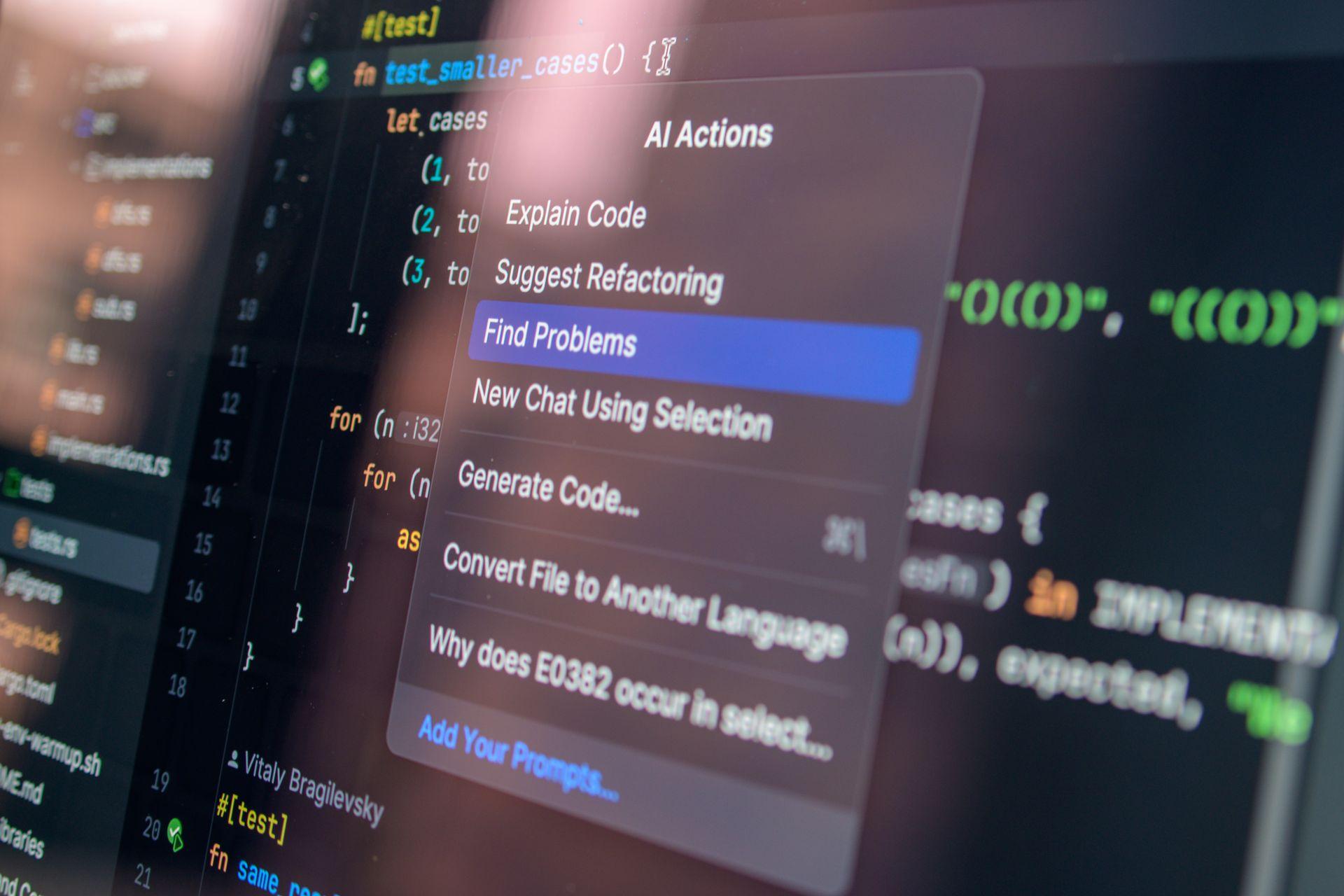
A typical workflow may include:
- A planning agent that maps requirements and dependencies: an AI candidate, as it requires synthesizing unstructured context.
- An implementation agent that proposes code changes: an AI candidate for the same reason.
- Deterministic test, security, and dependency-scanning pipelines that validate the results (traditional tooling): repeatable, rule-based checks that don’t benefit from generative uncertainty.
- Documentation and release automation that prepares evidence for human approval, a mix of both matched to task complexity.
Orchestration means routing each piece of work to the right tool, not defaulting to an agent because one is available.
AI Amplifies the System You Already Have
AI doesn’t repair a fragmented engineering system; it amplifies what’s already there. In a mature environment, agents accelerate testing prep, documentation, and release readiness. In a fragmented one, they deepen gaps in architecture and quality control.
The goal isn’t maximum autonomy. It’s controlled acceleration, with model capability matched to task complexity: small, fast models for classification and extraction; larger, more autonomous agents reserved for long-horizon work where the ROI justifies the added cost and latency.
Databricks’ benchmark on their multi-million line codebase proves model capability is only half the battle. Streamlined harnesses like Pi cut task costs in half simply by maintaining a tight working context instead of re-feeding bloated data on every turn. Model quality gives you potential, but the surrounding harness (context management, tool access, and workflow state) determines whether that potential turns into reliable code.[4][5]
Deterministic Gates, Not Self-Grading AI
Probabilistic models shouldn’t hold the keys to production.
LLM-as-a-judge frameworks are useful for profiling agent behavior and tool usage, but current LLM capabilities cannot give final sign-off on its own code. Rather than replacing established verification tools with more AI, the focus should be using proven, deterministic controls to validate model output in conjunction with agentic review where applicable.[6][7]
A pragmatic engineering baseline enforces hard boundary lines:
- Isolate agent executions in disposable local containers or sandboxes.
- Enforce standard compilers, linters, and type-checkers on every generated change.
- Require green CI/CD passes across existing unit, integration, and security suites before human review.
- Keep AI evaluation strictly contained to telemetry, tracking how agents reason rather than grading whether code is correct.[8]
Adopting AI for engineering velocity requires a harness that forces models to prove their work. As models and agent architectures evolve, the goal remains the same: use AI wherever it speeds up delivery without sacrificing rigor.
To capture real, sustainable enterprise value from autonomous SDLC pipelines, technical leadership must establish automated, isolated validation gates. If you don’t deliver on that first you aren’t accelerating anything except the accumulation of technical debt.
Measure the Outcome, Not the Autonomy
Agentic Code Delivery doesn’t remove engineers from the process; it moves their expertise toward higher-value decisions: defining constraints, designing workflows, reviewing evidence, resolving exceptions, and protecting architectural integrity.
The software engineering domain is progressing past AI code completion. Engineering leaders must structurally shift their operational lens from managing code writers to ecosystem guidance.
Success isn’t measured by how much of the SDLC agents touch. It’s measured the way any AI initiative should be: lead time, review effort, failed releases, escaped defects, infrastructure cost, and time to value, named up front, tracked continuously, and revisited as the economics change.
From Faster Code to Safer Change
The organizations that lead this shift won’t be the ones generating the most code. They’ll be the ones whose delivery systems can safely absorb the most change, with AI applied where it earns its place and proven tooling doing the rest.
Key Takeaways
- Agentic Code Delivery must prioritize disciplined orchestration and human-in-the-loop validation over pure autonomy.
- Enterprise value comes from integrating AI into specific SDLC phases where it demonstrably reduces lead time or defects, rather than applying it broadly.
- Traditional deterministic tooling remains critical for security, testing, and compliance and must be used alongside AI to ensure reliability.
- Engineering leaders should measure success based on overall delivery outcomes like lead time and defect rates, not the extent of AI adoption.

Author:
Chad Jackson, Head of Technology, Zilker Trail
Sources
[1] McKinsey & Company — A coding boost from AI, 2026. https://www.mckinsey.com/featured-insights/charts/a-coding-boost-from-ai
[2] DEPT® — AI can write code. Enterprise delivery is harder, 2026. https://www.deptagency.com/insight/ai-can-write-code-enterprise-delivery-is-harder/
[3] IT Brief Australia — AI speeds coding but not enterprise software delivery, 2026. https://itbrief.com.au/story/ai-speeds-coding-but-not-enterprise-software-delivery
[4] VentureBeat — Xiaomi’s new open source, agentic AI coding harness MiMo Code beats Claude Code at ultra-long, 200+ step tasks, 2026. https://venturebeat.com/technology/xiaomis-new-open-source-agentic-ai-coding-harness-mimo-code-beats-claude-code-at-ultra-long-200-step-tasks
[5] Xiaomi MiMo — MiMo Code: Scaling Coding Agents to Long-Horizon Tasks, 2026. https://mimo.xiaomi.com/blog/mimo-code-long-horizon
[6] Model Context Protocol — What is the Model Context Protocol?, 2026. https://modelcontextprotocol.io/docs/getting-started/intro
[7] DeepEval — MCP Evaluation Quickstart, 2026. https://deepeval.com/docs/getting-started-mcp
[8] DeepEval — MCP-Use, 2026. https://deepeval.com/docs/metrics-mcp-use